Pool Opening Guide
How to open your pool the right way for a cleaner, safer swimming season.
Open your pool the right way and enjoy cleaner, safer water all season long. Whether you own an above-ground or in-ground pool, a proper pool opening helps prevent algae, equipment problems, and cloudy water before summer even begins.
When to Open Your Pool
The best time to open a pool is when daytime temperatures consistently stay above 65°F. Opening early helps prevent algae growth and makes startup easier.
For most pool owners in the Northeast, pool opening season usually begins between late March and early May, depending on weather conditions.
Pool Opening Checklist
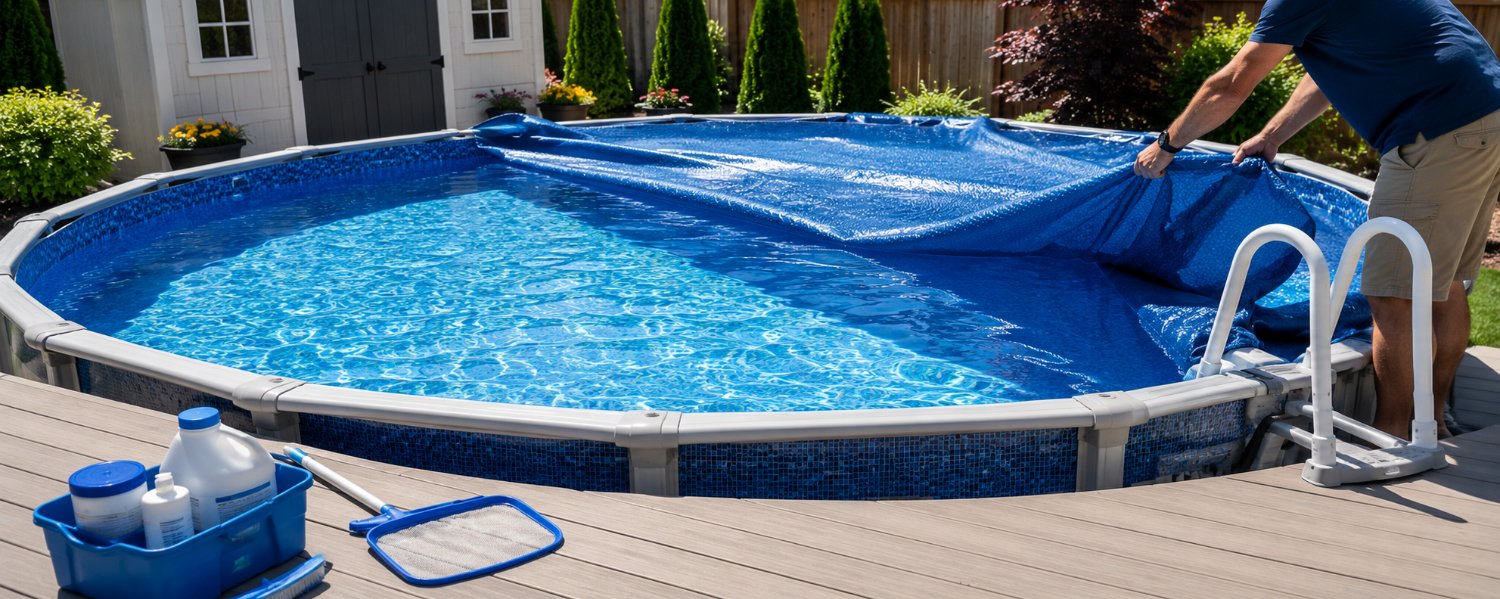
1. Remove the Pool Cover
Carefully remove leaves, standing water, and debris from the cover before taking it off.
- Use a cover pump if needed.
- Avoid dumping dirty water into the pool.
- Let the cover dry completely before storage.
Inspect the cover for damage before folding and storing it.
2. Inspect the Pool and Equipment
Walk around the pool and check for visible damage before starting the system.
- Pool liner or walls
- Skimmer and return fittings
- Pump and filter connections
- Hoses and clamps on above-ground pools
- Electrical connections and timers
Look for cracks, leaks, loose fittings, or winter damage.
3. Reinstall Pool Equipment
Reconnect all equipment removed for winter storage.
- Pump and filter
- Pressure gauge
- Return jets
- Skimmer baskets
- Pool ladder or steps
- Salt system components
- Chlorinator
Lubricate O-rings if needed and tighten fittings securely.
4. Fill the Pool to the Proper Level
Use a garden hose to raise the water level to the middle of the skimmer opening.
Low water levels can damage the pump and prevent proper circulation.
5. Prime and Start the Pump
Before turning on the system:
- Open all valves.
- Fill the pump basket with water.
- Secure the pump lid tightly.
Turn the pump on and allow the system to circulate. Watch for air leaks, low pressure, water leaks, or unusual noises.
6. Clean and Vacuum the Pool
Remove leaves and debris using a leaf net, pool brush, manual vacuum, or automatic pool cleaner.
Brush the walls, floor, steps, and corners thoroughly before vacuuming.
7. Test and Balance the Water
Proper water chemistry is critical during startup.
- Chlorine
- pH
- Total alkalinity
- Stabilizer, also called CYA
- Calcium hardness, if applicable
Typical Pool Water Startup Ranges
- Chlorine: 1–3 ppm
- pH: 7.2–7.6
- Total Alkalinity: 80–120 ppm
Adjust chemicals gradually and retest as needed.
8. Shock the Pool
Add pool shock to destroy contaminants and help clear cloudy water.
Run the pump continuously for at least 24 hours after shocking. Do not swim until chlorine levels return to safe ranges.
Above-Ground Pool Opening Tips
Check Flexible Hoses Carefully
Above-ground pools often use flexible hoses that may crack during winter storage.
- Inspect hose clamps.
- Check return lines.
- Look over pump fittings.
- Replace worn O-rings if needed.
Inspect the Pool Wall and Liner
Freeze and thaw cycles can shift the ground around above-ground pools.
- Leaning walls
- Wrinkles in the liner
- Rust spots
- Loose top rails
Address structural problems early before filling completely.
Watch Water Around the Base
Standing water around the outside of the pool can weaken supports and create erosion. Improve drainage if necessary.
Common Pool Opening Problems
Cloudy Water
Cloudy water is usually caused by poor filtration, low chlorine, debris buildup, or unbalanced water. Run the filter continuously and balance the water.
Green Water
Green water usually means algae has started growing, especially if the pool was opened late.
Shock the pool, brush all surfaces, vacuum debris, and run the filter continuously.
Pump Won’t Prime
If the pump will not prime, check for low water level, air leaks, clogged skimmer baskets, or closed valves.
Simple Pool Opening Supplies Checklist
- Water test kit
- Pool shock
- Chlorine tablets or sanitizer
- Pool brush and vacuum
- Leaf net
- Replacement O-rings
- Filter cleaner
- Pool lubricant
- Skimmer baskets
Final Thoughts
Taking the time to open your pool correctly helps avoid expensive repairs and frustrating water problems later in the season. A clean start, balanced water, and proper circulation are the keys to a successful swimming season.